

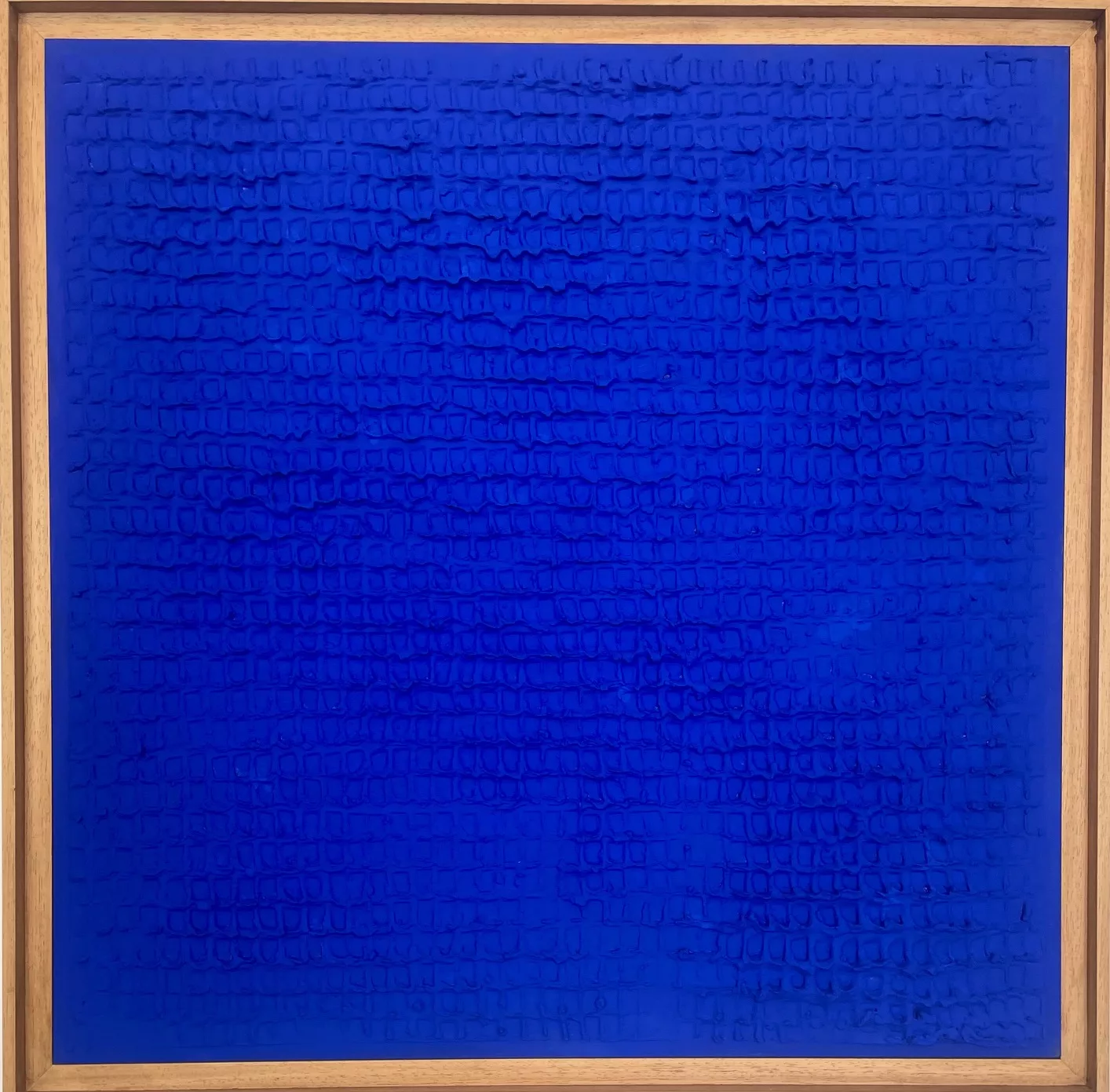

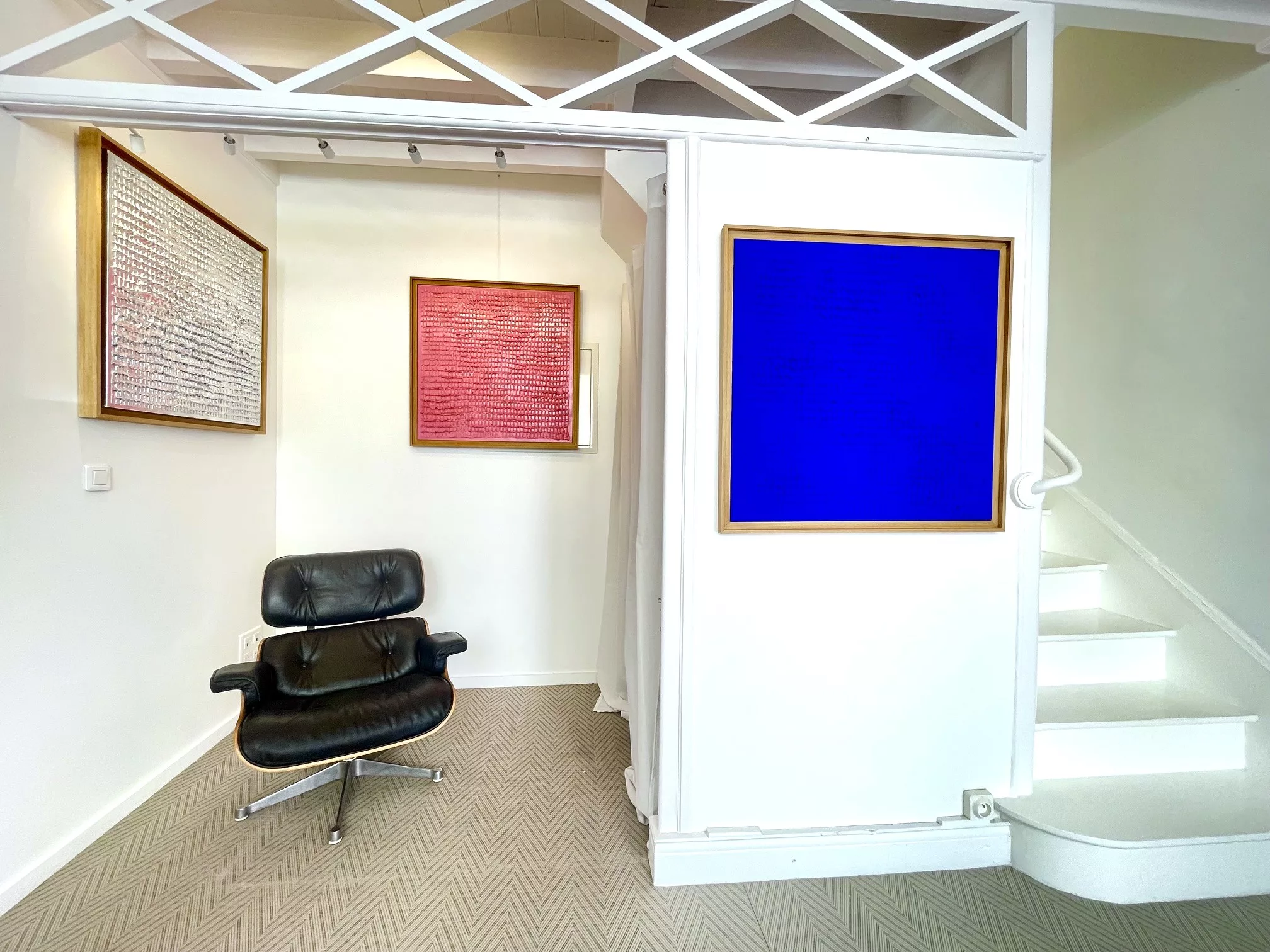
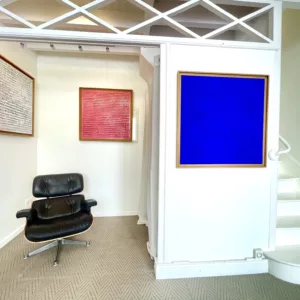
Abstract Blue Bas-Relief
Alexandre Geoffroy
Plaster, spray & varnish
80cm x 80cm x 3cm
Unique piece
Delivery
The delivery time for this work is 7 to 10 days.
Good to know
We will be happy to answer any questions you may have about this work. Please do not hesitate to contact us by clicking here.
About the artist
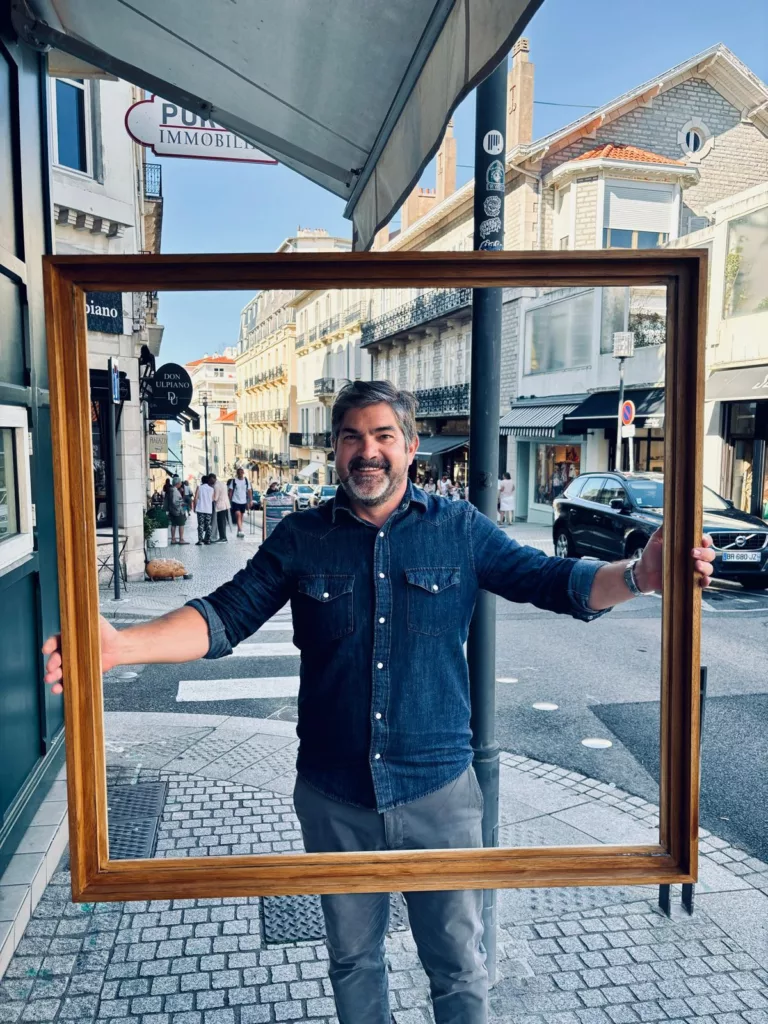
Alexandre Geoffroy
Born in 1977, Alexandre Geoffroy is a contemporary artist based in Biarritz. His artistic calling stemmed from a dual revelation at the age of ten: first, Pierre Soulages, the painter of black who could make light burst forth from it, and then Nicolas de Staël and his abstract technique based on thick layers of paint. From this encounter arose an obsession that would never leave him: an obsession with the material itself.
Alexandre Geoffroy expresses himself through painting with a style all his own, juxtaposing tiny, strictly identical squares of oil paint—not painted but sculpted—on a pre-painted background, which may or may not be the same color. His very first canvas—monochrome and black, an unconscious nod to Soulages—already sought to recreate the texture of skin or leather, an epidermis viewed under a microscope. Since then, he has continued to explore the possibilities of this technique, developing his own tools, far removed from traditional paintbrushes. He paints while dancing, he says, swaying from left to right without looking at the work head-on, to better sense the interplay of reflections and texture he is shaping. The central role of color complements that of texture. The artist plays with vibrant, deep colors that constantly draw the viewer’s eye.
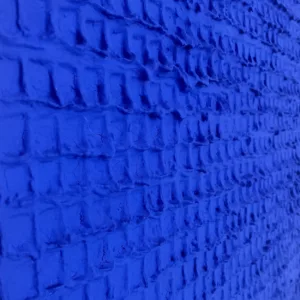
His work today revolves around two techniques. On the one hand, there are abstract bas-reliefs, where sculpted plaster evokes the skin of a snake or a crocodile—an almost living surface—which is then coated with spray paint and varnish, imbuing every crevice of the piece with a raw color. On the other hand, there are the more contemplative oil paintings on canvas, where the material loses none of its movement. In some works, the deep, nuanced blues evoke the ocean floor and the filtered light of the sea. This interplay of color intensities creates a simultaneous effect of transparency and opacity.
One can discern in his work a connection to kinetic art; the legacy of Vasarely and his optical illusions, or of Julio Le Parc, for whom color existed only in interaction with light. In other words, in Alexandre Geoffroy’s work, movement does not stem from a repeated geometric motif: it arises from the relief itself—from the thickness of the plaster or the fine squares painted in oil—which captures and refracts light depending on the time of day, the angle, and the viewer’s position. This kinetic quality allows a single canvas to take on a different appearance in the morning and evening, when viewed head-on or from an angle, as a smooth surface or a textured material.
The precision of his technique leaves no room for error: each square must fit perfectly onto the ones before it, and a 100 x 100 cm canvas requires the carving of more than 10,000 squares, like a vast mosaic created in an almost continuous motion. The most time-consuming part of the work, however, is not the execution itself but the mental preparation that precedes it: an idea that haunts him for several days before he can begin, and which demands his absolute concentration. Right up until the very end, each work remains a source of doubt: the artist cannot judge the surprise effect created by light and angle until the canvas is finished.
Obsessed with symmetry, depth, and the thickness of the material, Geoffroy describes his own practice as both a form of introspection and a quest for satisfaction.
Other available artworks
-
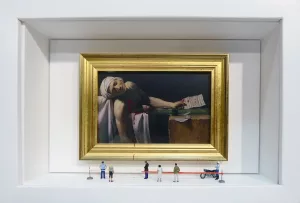
Box story Do not cross
Mixed media
34cm x 24cm x 6cm
750,00€Pièce originale singulière dans une édition de XX exemplaires
-
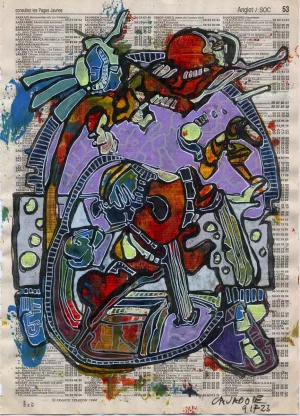
91723
21cm x 29.7cm
550,00€ -
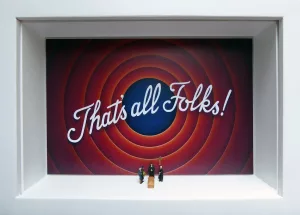
Box story That’s all folks
Mixed media
34cm x 24cm
750,00€Pièce originale singulière dans une édition de XX exemplaires
-
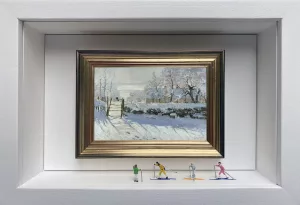
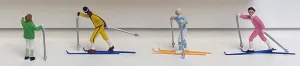
Box story Winter 2050
Mixed media
34cm x 24cm
750,00€Pièce originale singulière dans une édition de XX exemplaires
-
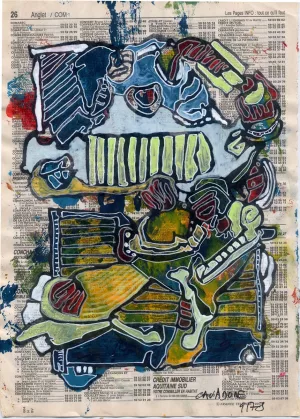
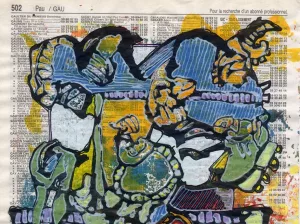
9179
21cm x 29.7cm
550,00€ -
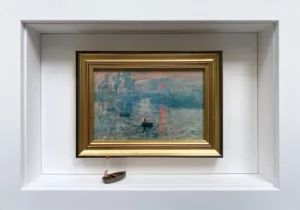
Box story Baywatch
Mixed media
34cm x 24cm x 6cm
750,00€Pièce originale singulière dans une édition de XX exemplaires
-
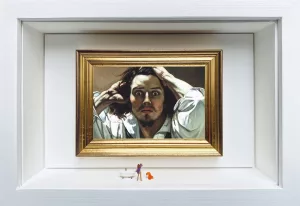
Facetime
Mixed media
34cm x 6cm x 24cm
750,00€Pièce originale singulière dans une édition de XX exemplaires
-
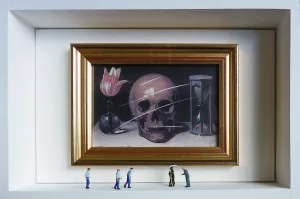
Box story Self sabotage
Mixed media
34cm x 24cm x 6cm
750,00€Original singular piece in an edition of 12 copies