

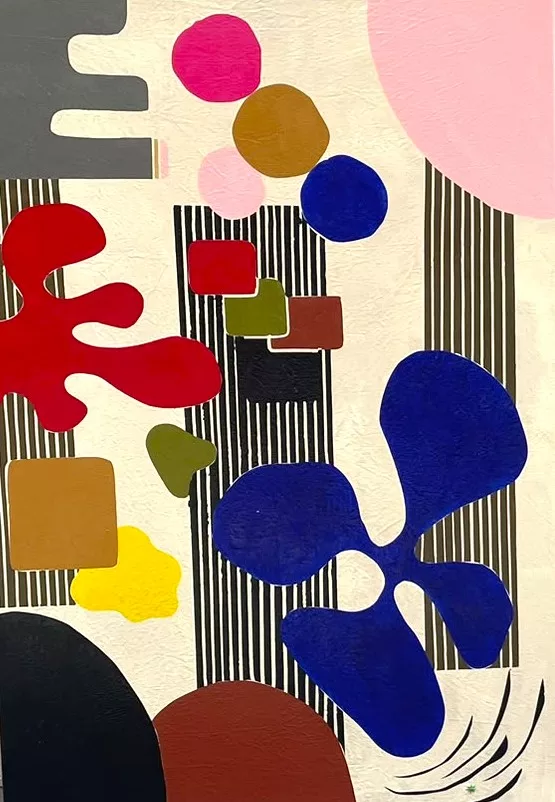

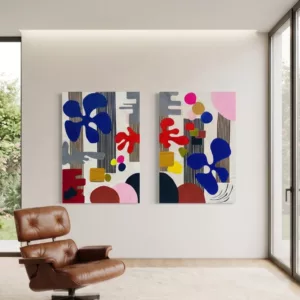
Love of the Theater I
Catherine Parra
Acrylic on linen
90cm x 130cm x 4cm
Unique piece
Delivery
The delivery time for this work is 7 to 10 days.
Good to know
We will be happy to answer any questions you may have about this work. Please do not hesitate to contact us by clicking here.
About the artist
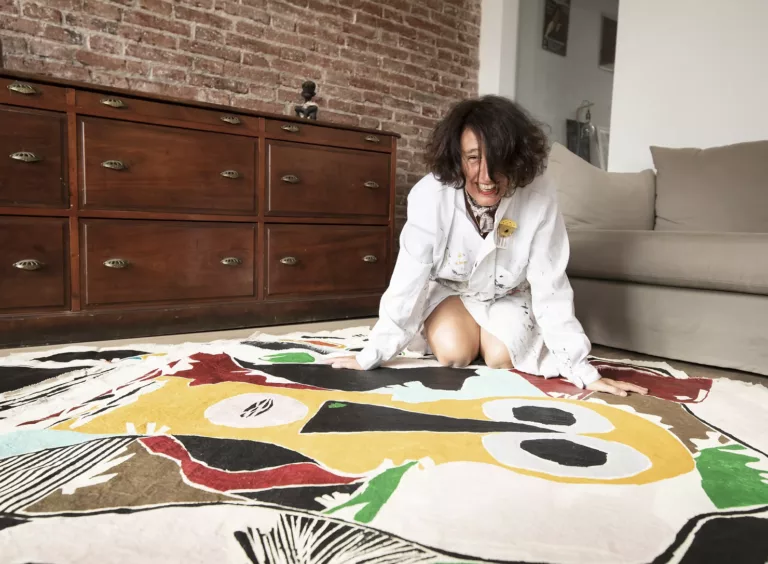
Catherine Parra
Catherine Parra
Catherine Parra is a French artist who lives and works in Barcelona. She was born in Lyon in 1965 and spent her entire childhood in Paris. From her teenage years onward, she used clothing and textiles as a canvas for experimentation. By playing with colors, materials, combinations, and above all, shapes, she developed her own style and a visual language that would influence her future work.
While launching her career in the creative department of a major communications agency, she continued to explore her artistic interests by trying her hand at sculpture, collage, interior design, and furniture restoration… Her need to give tangible form to shapes and figures became clear: she began training in textile design.
One day, she was amazed to discover a gigantic artwork depicting a page from a notebook, with its calligraphic lines and cross-outs. The monumentalization of the object, the words, and the corrections—errors that were visible yet embraced—inspired her first paintings. Later, she decided to transform a batch of army blankets into bags—this marked the starting point for a collection conceived around repurposed objects and materials, such as blankets, coffee sacks, and vintage corsets…
In the early 2000s, she moved to Barcelona. She diversified her collections of shoes and fashion accessories with bold and playful designs, customizing colors and prints. Gradually, she began incorporating painting into her collections, first using acrylics on shoes and then on bags, evolving toward a highly abstract style. The painted designs on her creations became her trademark, and each piece produced is one-of-a-kind.
Her style, at the intersection of lyrical abstraction, art brut, and expressionism, draws on the legacy of design and art from the 1960s and 1970s. From Miró, Catherine Parra draws on the floating, vibrant forms; from Le Corbusier, the geometric rigor that contains and structures the organic explosion of her compositions. This energy finds a direct echo in Batik prints, from which she retains the boldness of the colors, the repetition of patterns, and the deliberate irregularities—an obvious kinship with her own stencil technique, which also relies on embraced accidents. Finally, there is textile design—the foundation of twenty years of experimentation with materials—and the retro appeal of Hermès red: a signature, timeless color that illuminates the profusion of her canvases with a precise radiance.
The emphasis is on the narrative aspect of intimacy, on exploring the strangeness of everyday life; Catherine monumentalizes it by stripping it of its meaning. The lines are fluid, ethnic, and primitive, with no associative reference to any specific object. The purified forms stand out from the background and are defined without any indication of space or perspective. The geometry of the volumes finds balance within the construction of a codified space, with a play of subtle and humorous echoes of colors or shapes. The color palette vibrates thanks to the prominence of the colors and their intrinsic force; they are bold, retro, explosive, and complementary—blazing like Africa—contrasted by an omnipresent and brutal black. The work as a whole radiates harmony, coherence, and rhythm on the canvas in an instinctive and primal movement, transporting us into a joyful, generous, organic, and vibrant universe.
The technique of tracing, using tape as a stencil, is characteristic of her entire body of work; it yields surprises, imperfections, and irreproducible errors—all anticipated and intended by the artist. The canvas is large-format, made of thick, washed linen—a living, textured material that brings great luminosity to the colors and connects the artist to her roots in the textile industry and her passion for materials.
Catherine explores the representation of the mind’s mechanisms; her focus is on the intellectual processes of the unconscious. The result is an expression of her emotional state at a given moment—a trance-like state during which the unconscious takes shape on the canvas. When painting, the artist experiences the total spontaneity of creation through the power of the unconscious. She projects onto her canvas a poetic language that expresses, in turn, joy, freedom, tenderness, humor, generosity… a language that allows her to engage in a dialogue about our doubts, our certainties, and our frustrations, but also to address more universal themes, such as resilience, legacy, and immortality.
Other available artworks
-
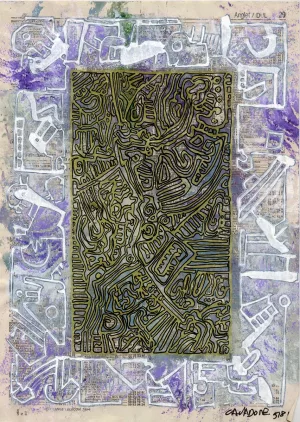
5181
21cm x 29.7cm
550,00€ -
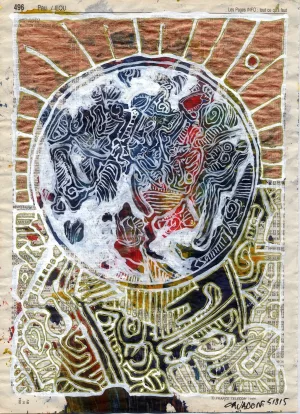
51815
21cm x 30cm
550,00€ -
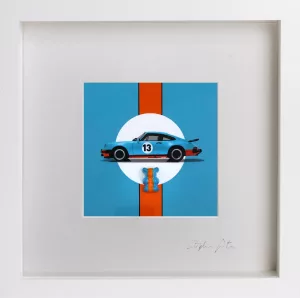
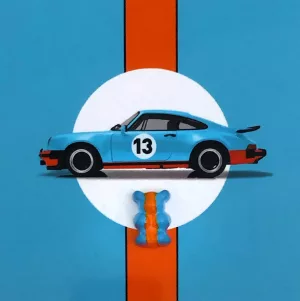
Mini Collector 911 Le Mans
Mixed media
27cm x 4cm x 27cm
600,00€Original singular piece in an edition of 20 copies
-
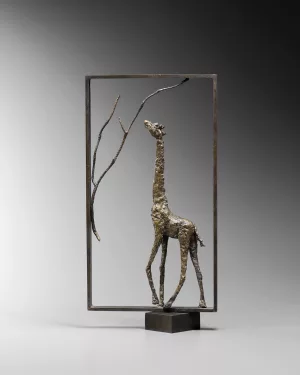
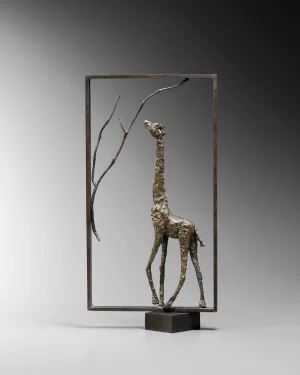
Savane
30cm x 15cm x 3cm
2900,00€ -
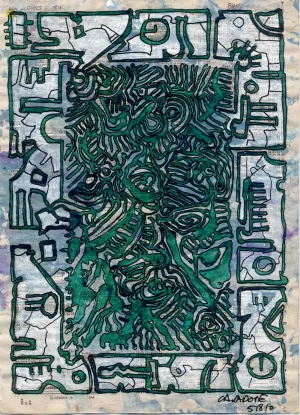
51810
21cm x 29.7cm
550,00€ -
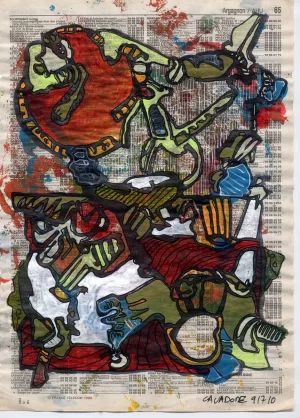
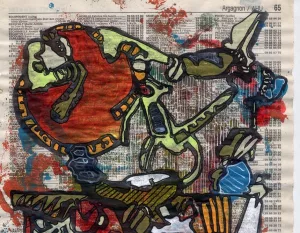
91710
21cm x 29.7cm
550,00€ -
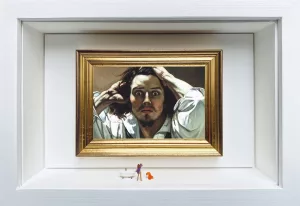
Facetime
Mixed media
34cm x 6cm x 24cm
750,00€Pièce originale singulière dans une édition de XX exemplaires
-

Du foin
Pigment inkjet print on fine art paper
20cm x 1cm x 30cm
100,00€